What Is DevOps
Gurucharan DevOps Engineer | Continuous Integration/Continuous Deployment | Automation Enthusiast
Welcome to my LinkedIn profile! I'm an aspiring DevOps engineer with a strong background in software development and system administration. My goal is to bridge the gap between development and operations, delivering efficient and reliable software solutions through seamless collaboration.
With experience in continuous integration/continuous deployment (CI/CD) pipelines, I specialize in automating software delivery processes to enhance development efficiency and quality. I excel in fast-paced, dynamic environments, leveraging infrastructure as code (IaC) tools like Terraform and cloud platforms such as AWS, Azure, and GCP to create scalable and resilient architectures.
My technical skill set includes proficiency in scripting languages (Python, Bash), containerization technologies (Docker, Kubernetes), and configuration management tools (Ansible, Chef). I possess a deep understanding of networking protocols and security principles, ensuring robust and secure environments.
Beyond technical experience, I believe in collaboration, cross-functional teams, and continuous learning. I thrive on solving complex challenges and seek opportunities for growth and innovation.
If you're looking for a passionate DevOps engineer to streamline software delivery, enhance system reliability, and drive organizational success, let's connect! I'm open to exciting opportunities and collaborations. Feel free to reach out via LinkedIn or email.
Let's build the bridge between development and operations, enabling continuous improvement and innovation!
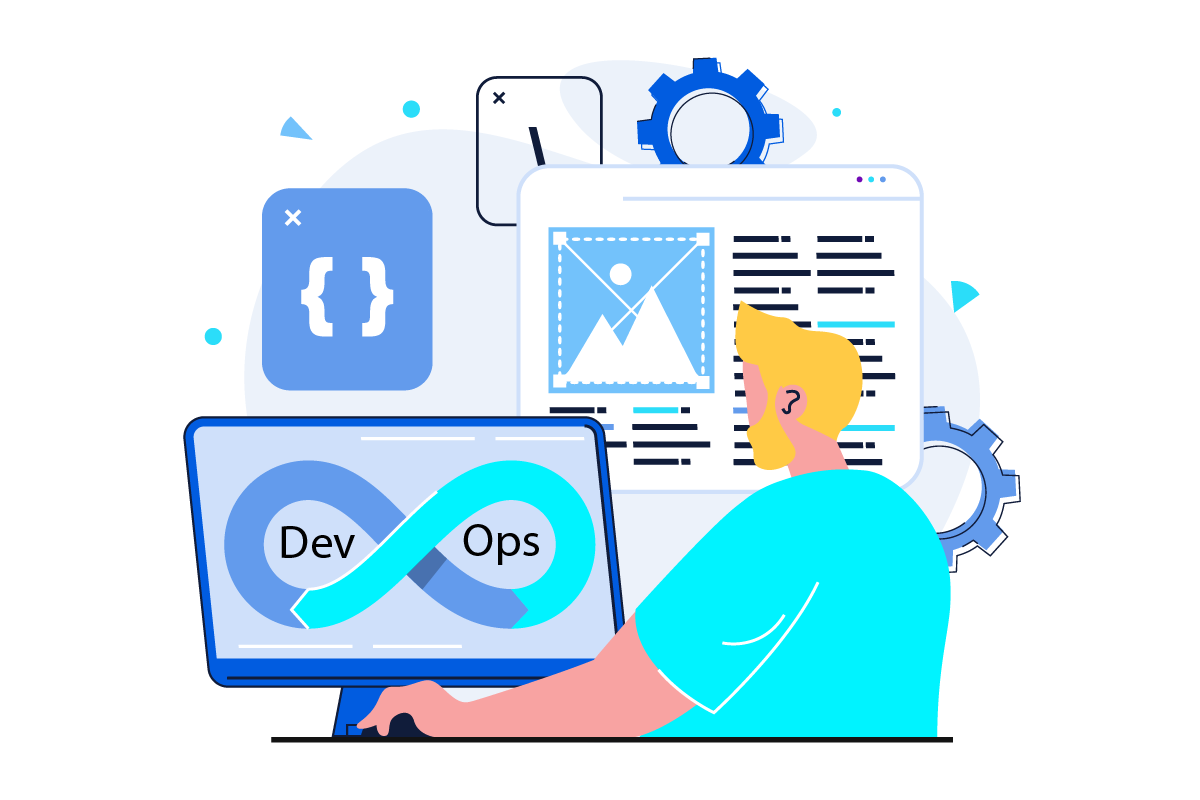
DevOps combines development (Dev) and operations (Ops) to unite people, process, and technology in application planning, development, delivery, and operations. DevOps enables coordination and collaboration between formerly siloed roles like development, IT operations, quality engineering, and security.
Teams adopt DevOps culture, practices, and tools to increase confidence in the applications they build, respond better to customer needs, and achieve business goals faster. DevOps helps teams continually provide value to customers by producing better, more reliable products.
Why should we learn DevOps?
Because automating things to scale up
1.DevOps saves time
DevOps facilitates smooth communication and collaboration between the development and operations teams. The practice also shortens the software development life cycle. By releasing code into production more frequently, DevOps increases the speed of code deployment and testing. And thus, the practice boosts software efficiency and helps developers save a lot of time.
2.DevOps quicker bug fixes
Developers need to regularly update software to add new features to them. At the same time, they need to maintain the stability of the code. DevOps engineers are familiar with the entire code and can easily mark new changes. By doing this, they can send parts of the code separately for testing and to maintain code stability.
Testing different parts of code helps locate the issue source faster. By finding issues faster, DevOps engineers resolve the problem in no time. And thus, DevOps makes it extremely easy to keep code free of bugs and defects.
3.DevOps better collaboration
DevOps engineers do not work in silos and can communicate freely with members of different departments. And thus, they facilitate better communication within the organization than traditional teams.
By sharing information with different team members, DevOps engineers can resolve issues faster and set up the right pipelines. Also, DevOps engineers encourage team members to come up with ideas and innovative methods to improve client and customer experience.
4.DevOps improved performance
DevOps engineers can share code bases and detect issues early. They enable automatic testing and continuous deployment of code to pass it directly into the production environment.
DevOps reduces deployment time and infrastructure costs. Also, it boosts recovery time, employee involvement, and success rate. And thus, DevOps improves the individual performance of team members and the overall performance of any organization.
How you become Devops engineer

Step by step
Hands-on Linux and open-source tool
First, learn what is Linux then do a hands-on it. You can learn it with youtube or any other online platform my recommendation is to go for the TarinWithShubham website and enroll in the course because they have the best community.
The project, Blog and also take 90days of DevOps challenge
Do a project with help of the community or by yourself but at the start take the help of the other form so that you will get more motivation as well as develop how to interact with others and improve in soft skills.
Post a blog on that twice weak or more you can post daily but the quality of the blog goes down so make sure that the blog has good-quality content.
Do the 90DaysDevops challenge in trainwithshubham so that you will get more hands-on practice.
Case study
Do as much a case study on DevOps topics as you may find on the internet my recommendation is Science-soft has the best case study.
Social media presence
Post on social media what you have learned so far and what you gain from it.
Again my recommendation is Linkedin, Github and Twitter and makes connections with other as well so that the recuriter thinks your serious about DevOps.
Groups studies
Make a community or join the existing one so that you can study with other because in group studies you can study by your mistake as well as from the other's mistakes as well.
Thanyou for reading this blog and if any query or if any correction to be done in this blog please let me know
contact us in Linkedin ,Twitter or email-id gurucharanu716@gmail.com